Blog
Build Your Lifting Foundation in Your 30s — Before Lines Set In
Curating Note 08
Seeking lifting treatments after wrinkles have already deepened, versus designing structural support before tissue integrity begins to fail — these may share the same name, but their goals are worlds apart. Prejuvenation in your 30s isn't about looking more lifted. It's about preserving the architecture of elasticity you still have, for as long as possible.
I'm Still Young — Do I Really Need a Treatment?
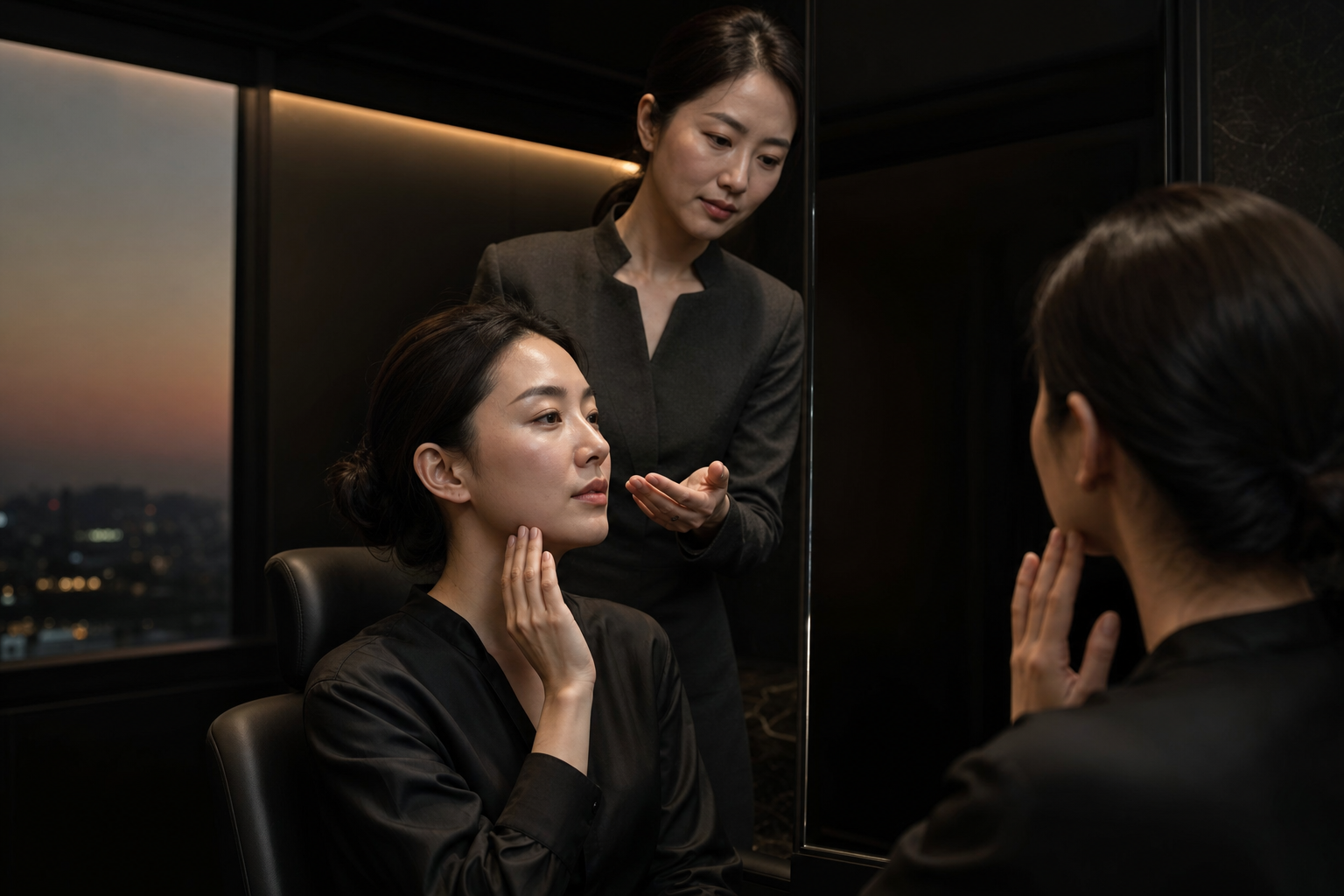
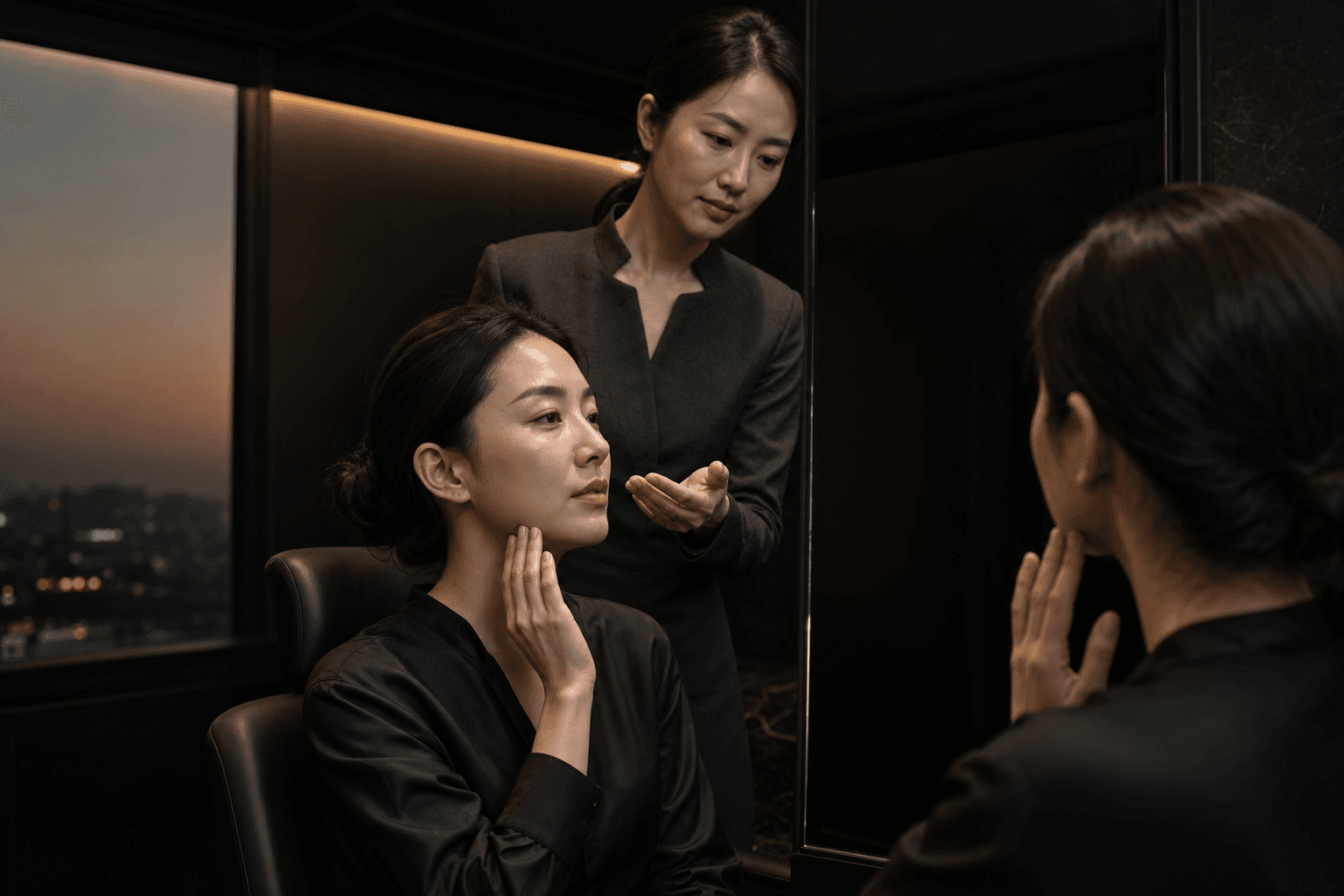
Patients in their 30s who travel to Seoul from abroad often open their consultation with the same feeling: their face in the mirror still looks clear and defined, yet somehow their contours in photos seem slightly softer than they used to. Even without obvious nasolabial folds or significant volume loss in the cheeks, the question inevitably follows — "Is this the age when I should start?"
That question isn't anxiety driven by trends. It's a question of timing. Dermatology literature frequently cites that collagen production decreases by roughly 1% per year after your 20s — though this reflects a general trend, and the actual experience varies significantly depending on genetics, sun exposure, weight changes, sleep, and facial habits. What matters isn't the number itself, but the fact that subtle laxity in the dermis and fascial support structures can begin before visible lines actually set in.
In Korean clinical practice, there has been a growing pattern of consulting on maintenance-focused lifting treatments from the late 20s through the 30s — before deep wrinkles develop. The reason SOEUN CLINIC views this window as a "pre-correction design phase" is straightforward: lifting already-sagging tissue and preserving the elasticity that still remains are fundamentally different in terms of planning and approach.
Prejuvenation is often misunderstood as "getting treatments early just to look younger." A more clinically accurate interpretation is a preventive approach — strategically combining UV protection, home care, energy-based treatments, and skin boosters based on each individual's tissue condition, before the signs of aging become fixed. This doesn't mean everyone in their 30s needs treatment. Equally, waiting until wrinkles deepen isn't the only form of being cautious.
Corrective Lifting vs. Preventive Lifting
The word "lifting" tends to conjure images of corrective treatments that reverse visible sagging. For patients in their 40s and beyond, the central question is often how to reposition soft tissue that has already shifted, reinforce a weakened fascial layer, and restore lost volume. For those in their 30s, the challenge typically comes one step earlier — the degree of descent may still be modest, but repeated facial expressions, gravity, and a gradual decline in dermal density are beginning to erode the structural "buffer" that defines a youthful contour.
Corrective Approach
This approach focuses on reducing already visible sagging, wrinkles, and volume loss. It often calls for a more active consideration of energy levels, treatment depth, and recovery time. Because the goals are clear, it is equally important to discuss realistic expectations alongside the potential benefits.
Preventive Approach
Rather than targeting obvious wrinkles, this approach focuses on maintaining the underlying support structures, preserving dermal density, and slowing the rate at which facial contours lose definition. Instead of dramatic one-session changes, the goal is to deliver carefully calibrated stimulation — adjusting interval and intensity so that tissue can respond and rebuild over time.
One common oversimplification in the preventive approach is the idea that "frequent mild treatments are enough." While lighter energy levels may mean less downtime, stimulation that doesn't reach the target tissue layer may offer limited benefit — even for maintenance purposes. Conversely, repeating excessive thermal injury or aggressive tissue tension at an early age can actually narrow the options available for correction later on. Intensity and frequency should be guided by how tissue responds, not by what happens to be trending.
Lifting in your 30s, then, is less about choosing a single device and more about sequencing — deciding which layer to address, and when. Surface texture and tone, dermal density, fascial support, hyperactive facial muscles, and lower-face volume each speak a different language. No single treatment speaks all of them at once. This is why SOEUN CLINIC incorporates lifting, skin boosters, and regenerative care into one cohesive program rather than treating each in isolation.
Why a 1:1 Analysis Comes First
Even among people in their 30s, the way the face ages is never the same. Some experience hollowing beneath the cheekbones first; others retain volume in the deep cheek but lose skin elasticity; some see the lower face definition blur early; and for others, the neck and jawline show the first signs of change before the eyes or nasolabial folds. Under flattering lighting and photo filters, all of these tend to get lumped together as simply "looking a little tired." A proper consultation is the process of untangling that—layer by layer.
The guiding principle of Dr. Soeun Kim, Chief Doctor, is to have dedicated physicians read each face by layer, distinguishing which layers call for intervention now and which are better left to observation. The fully appointment-based system exists precisely so this analysis never has to be rushed. The streamlined, private clinic environment makes a real difference for international patients who need to align their consultation and treatment plan within a limited stay.
Reading the Tissue
Skin thickness, elasticity, fat distribution, habitual expressions, and prior treatment history are all assessed together. A blanket rule like "maintenance lifting because you're in your 30s" is never applied. The first decision is simply distinguishing who genuinely needs treatment now from who would benefit more from at-home care or preventive skincare first.
Prioritizing Layers and Areas
Lifting energy, skin boosters, and regenerative treatments are never bundled together indiscriminately. The sequence is only determined after establishing whether structural support comes first, or whether improving skin texture, hydration, and density takes priority.
Planning the Interval and Visit Schedule
A single treatment does not complete a prevention strategy. Your available stay, acceptable downtime, and likelihood of a follow-up visit are all factored in realistically, so the proposed intervals are never excessive. Rather than promising guaranteed results, we share clear observation points and the timing for reassessment.
What Lifting Does
Energy-based approaches—such as heat and ultrasound—are considered for their ability to stimulate the dermis or fascial layer and encourage tissue remodeling. For patients in their 30s, the standard is not "as aggressive as possible," but rather "precise to the target layer, with a predictable recovery timeline." Whether treatment is appropriate depends on indications, contraindications, and individual skin type.
What Skin Boosters and Regenerative Care Do
While lifting addresses structural support, skin boosters and regenerative treatments focus on the complementary axis of surface density, hydration, and the skin's recovery environment. Hydration alone will not resolve sagging—and equally, expecting lifting alone to transform skin texture is a design error in treatment planning.
Body contouring is incorporated into the same program only when the concern goes beyond facial aging—specifically when weight fluctuations, posture, or fluid retention are contributing to changes along the lower face and jawline. The tendency to attribute everything about an appearance to the face alone, and to address it all through facial lifting, is something we are particularly cautious about when designing a plan for someone in their 30s. Diagnosis always comes first. Treatment follows.
What Visitors in Their 30s Should Know Before a Short Stay in Seoul
Most visitors from Japan, Chinese-speaking regions, and English-speaking countries who come to Cheongdam are working a medical consultation into an existing travel itinerary. In that context, trying to fit in as many treatments as possible is rarely the right approach. What actually matters is whether post-treatment swelling or redness will overlap with your photo schedule, whether flying after a procedure is advisable, and how many months will pass before your next visit — all of these become part of the planning process.
The Cheongdam and Apgujeong Rodeo area makes accommodation and transportation relatively easy to manage. That said, convenience alone doesn't determine the quality of care you receive. What sets SOEUN CLINIC apart is its appointment-only, one-on-one consultation structure. Rather than squeezing treatments into a rushed day, it's far safer to map out the full sequence — consultation, treatment planning, procedure, and follow-up assessment — before you even arrive.
The real measure of prejuvenation in your 30s isn't how you look right after a treatment. It's whether, six months to two years later, you've built a foundation that means you don't need to repeat the same intensity again.
SOEUN CLINIC Curating NoteIt's also worth reconsidering the idea that clinical treatments alone can do all the preventive work. Sun protection, minimizing skin irritation, quality sleep, and maintaining a stable weight are variables that operate on a deeper level than any lifting protocol. The clinic designs its interventions around those variables — their type, timing, and intensity all depend on them. And if intervention isn't yet necessary, that conclusion itself is the outcome of a proper consultation.
Frequently Asked Questions
Is it too early to consult about lifting treatments in your 30s?
Age is a reference point, not an absolute rule. Even without deep wrinkles, if you're noticing a loss of definition, reduced elasticity, or recurring puffiness, a preventive maintenance plan may be worth considering. On the other hand, if strengthening the skin barrier and improving lifestyle habits is the priority, deferring treatment may be the more appropriate choice. We never make blanket statements like "you should start at this age" without an individual consultation.
What's the difference between prejuvenation and anti-aging?
Anti-aging focuses on reducing signs of aging that have already appeared, while prejuvenation is about managing the underlying support structures and skin quality before those signs become established. The two can overlap in terms of treatments used, but they differ in intensity, frequency, and how success is defined. If anti-aging is about reversal, prejuvenation is about pacing.
Isn't home care and sunscreen enough?
UV protection is fundamental to preventing photoaging, and no treatment can replace it. However, the effects of gravity, fascial laxity, and declining dermal density are difficult to address through topical products alone. Treatments are an option to fill that gap — not a superior alternative to daily care. In our consultations, we address both dimensions together.
Can I start a program even if I'm on a short business trip or travel schedule?
It depends on the type of treatment, expected reaction, your flight schedule, and the interval before your next visit. During a one-on-one consultation, we'll determine what can be done on the day and what should be saved for a follow-up visit. In most cases, we advise against cramming multiple treatment areas into a single session simply because your stay is short.
Does one treatment complete the prevention process?
No. Collagen metabolism and the effects of gravity continue well after any single treatment. Prejuvenation is not a one-time event — it's an ongoing maintenance plan that includes periodic reassessment. Results vary from person to person, and specific outcomes cannot be guaranteed. If committing to a long-term plan feels overwhelming, we can start by simply scheduling a check-in interval.
The information provided here is for general informational purposes only and does not substitute for individual medical diagnosis or treatment advice. Treatment indications and approaches vary based on skin condition, medical history, and current medications, and results differ for each individual. Accurate assessment is made through an in-person consultation.
We Design Your Lifting Plan Around Your Schedule
Whether you're in your 30s looking to get ahead of deeper wrinkles, or you need a clear benchmark between maintenance and correction, our dedicated medical team offers one-on-one consultations to help you prioritize. SOEUN CLINIC operates on a 100% appointment-only basis.